The Modern Guide to Hiring Talent in the Philippines
How I built a high-performing remote team in the Philippines — from sourcing and vetting candidates to training them from the ground up. A practical, experience-based guide for agency and business owners.

If you're a business owner, an agency owner, or someone looking to build a remote team and want to hire talent from the Philippines, this guide might be helpful for you.
This guide specifically documents how I hire and built a remote team here in the Philippines.
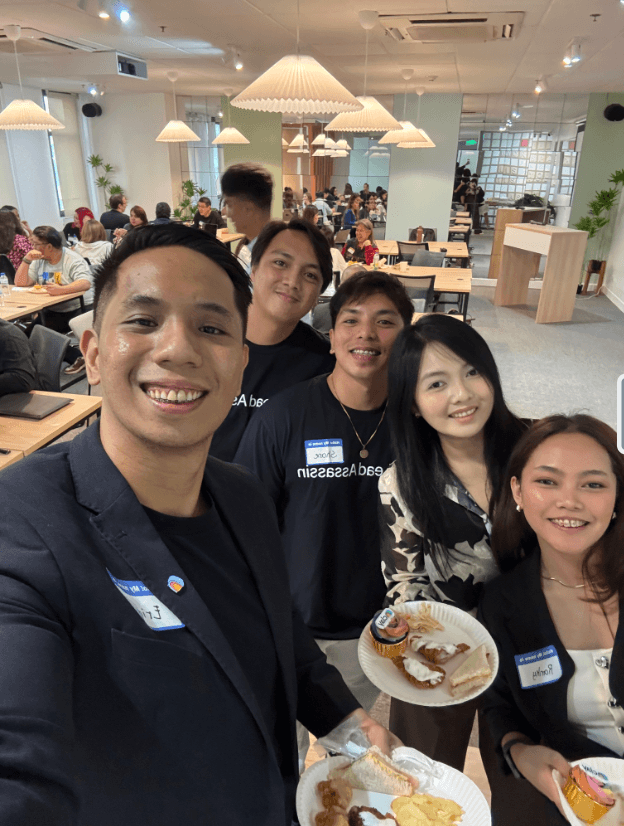
Please note that I'm not an expert on this topic. My team is small (we are only a team of 6, including myself). However, I'm proud to say that I've built a high-performing team.
I simply want to share what I've learned about hiring and my personal experiences. If you ever feel that my credibility is in question due to the small size of my team, you are welcome to stop reading at this point.
Why the Philippines
The Philippines is an excellent resource for finding talent — and I'm not just saying this because I'm Filipino. I've witnessed firsthand the resilience of Filipinos. Many are accustomed to working during Eastern Time or U.S. hours, which means pulling graveyard shifts or early mornings here. This adaptability is largely due to the BPO culture in our country.
Of course, not every candidate from the Philippines will meet your expectations. However, with a thorough vetting process and the right hiring approach, you can find talent that not only genuinely cares about your business but is also committed to growing with you long-term.
I have many Filipino friends who work as freelancers and for various agencies. They have been collaborating with their clients for several years. Some GTM (Go-To-Market) Engineering agencies — even well-known ones (though I won't name them) — rely heavily on specialized talent from the Philippines.
Many people don't realize this, but many Filipinos possess strong technical skills. Even if some talent may lack specific domain knowledge (e.g., they're not trained to do GTM Engineering work), they can excel with proper training, resources, and support. With the right guidance, they can perform at unexpectedly high levels. Trust me.
You may have noticed that I didn't mention cheaper labor. In my opinion, hiring in the Philippines isn't primarily about cost savings. You can hire a team member for significantly less — sometimes 5x cheaper than a full-time employee — but that's just a bonus. The main reason to hire someone in the Philippines is the exceptional talent and capability they bring to the table.
Hiring in the Philippines isn't about cheap labor. It's about finding resilient, technically capable talent who can grow with your business long-term. The cost advantage is just a bonus.
If I already have your attention, let me share insights on sourcing talent, identifying top candidates, and best practices for training them.
Where We Source Talent
OnlineJobs.ph
When we're hiring talent in the Philippines, we mainly use OnlineJobs.ph — and many non-PH based businesses are using this platform too.
It has a large and active talent pool, particularly for remote agency roles. Sometimes it's a hit or miss in terms of applicant quality, but we have successfully made strong hires through it.
This platform is ideal for finding people who want to join your team long-term and whom you're willing to train from the ground up. In my observation, many talents here are fresh graduates or have less experience compared to those on LinkedIn and Upwork.
Upwork
Upwork, on the other hand, typically offers a more curated pool of candidates and is particularly effective if you're looking for mid-to-expert level talent. For example, if you're seeking a part-time GTM Engineer who already understands Clay and basic lead generation, this platform is preferable to OnlineJobs.ph.
For best results, roles should be posted on both platforms whenever possible to maximize reach and candidate quality.
The Hiring Process
Role Clarity & Compensation Planning
Before publishing any job post, it is critical to define the compensation structure and role expectations. You should first research the current market rate for the role within the Philippines and determine whether you intend to offer market rate compensation or position slightly above market to attract higher-quality candidates.
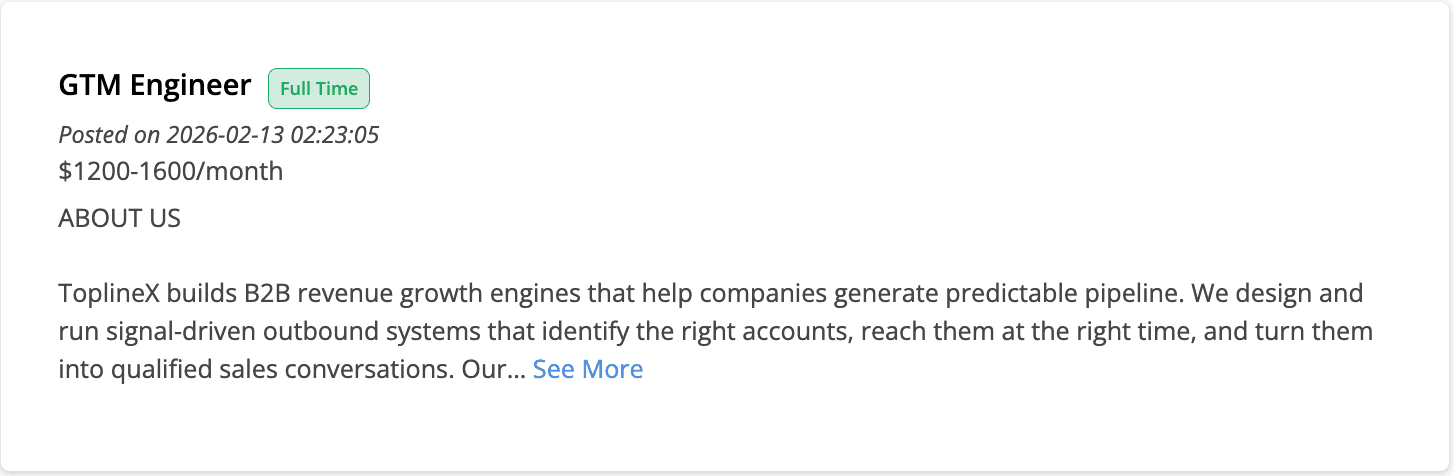
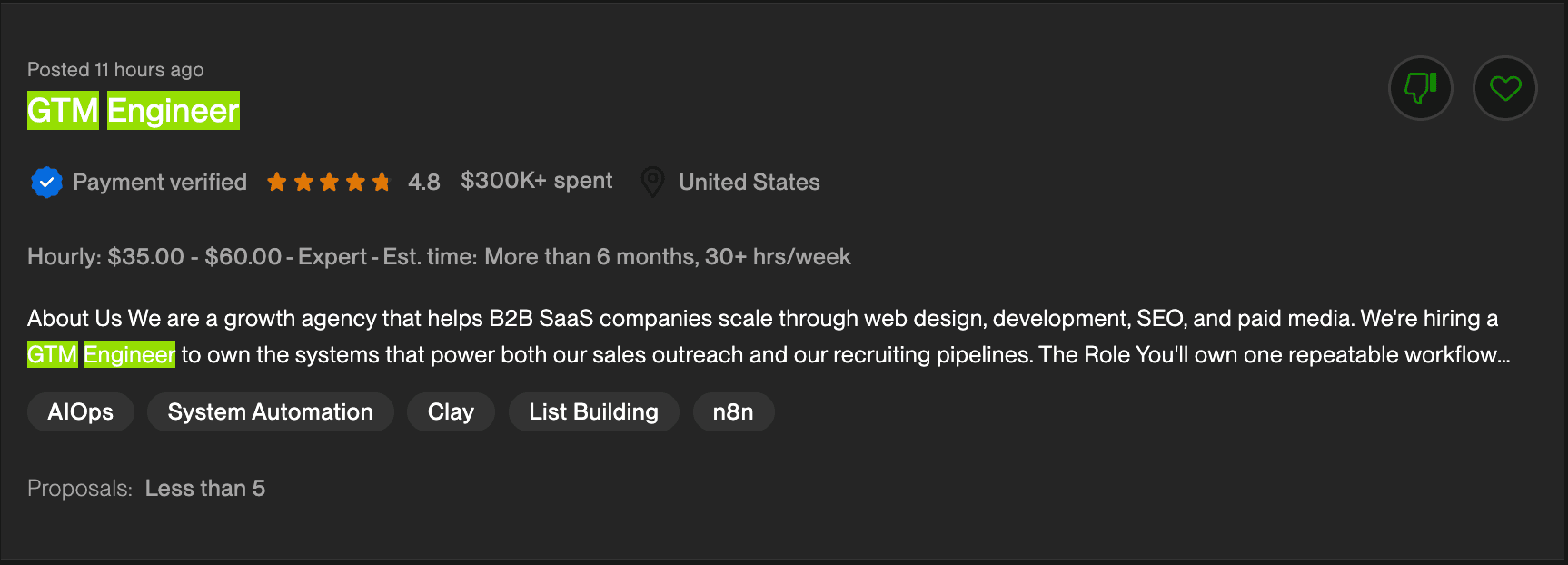
In many cases, being competitive with compensation significantly improves the caliber of applicants. Additionally, you must define whether the role is full-time or part-time. For certain managerial roles, a common structure may involve four hours per day, four days per week — though this depends on your business needs.
Ultimately, compensation must align with the value the hire is expected to deliver.
Reducing Spam Applications
Both OnlineJobs.ph and Upwork receive a high volume of applications — many candidates mass-apply without thoroughly reading job descriptions.
To address this, your job post must include a built-in filtering mechanism. At the bottom of your job description, include a specific instruction such as requesting a unique subject line format (for example, asking applicants to include their favorite cuisine in the subject line).
This ensures that only candidates who have thoroughly read the posting and followed instructions advance in the screening process. Applications that don't adhere to the instructions can be immediately filtered out, significantly reducing screening time and improving applicant quality.
Include a hidden instruction in your job post (like a unique subject line format) to filter out mass-applicants who didn't read the full description. This one trick will save you hours of screening time.
*Note: This method may be less effective now due to AI and bots handling proposal submissions, as they are becoming increasingly sophisticated.*
Resume & Proposal Screening
During resume screening, the first step is verifying that the applicant followed the submission instructions. From there, assess the candidate's relevant experience, alignment with the role requirements, and measurable outcomes — not just listed responsibilities. Shortlisted candidates should then proceed to an initial screening call to evaluate communication skills and cultural alignment.
The Hiring Exercise
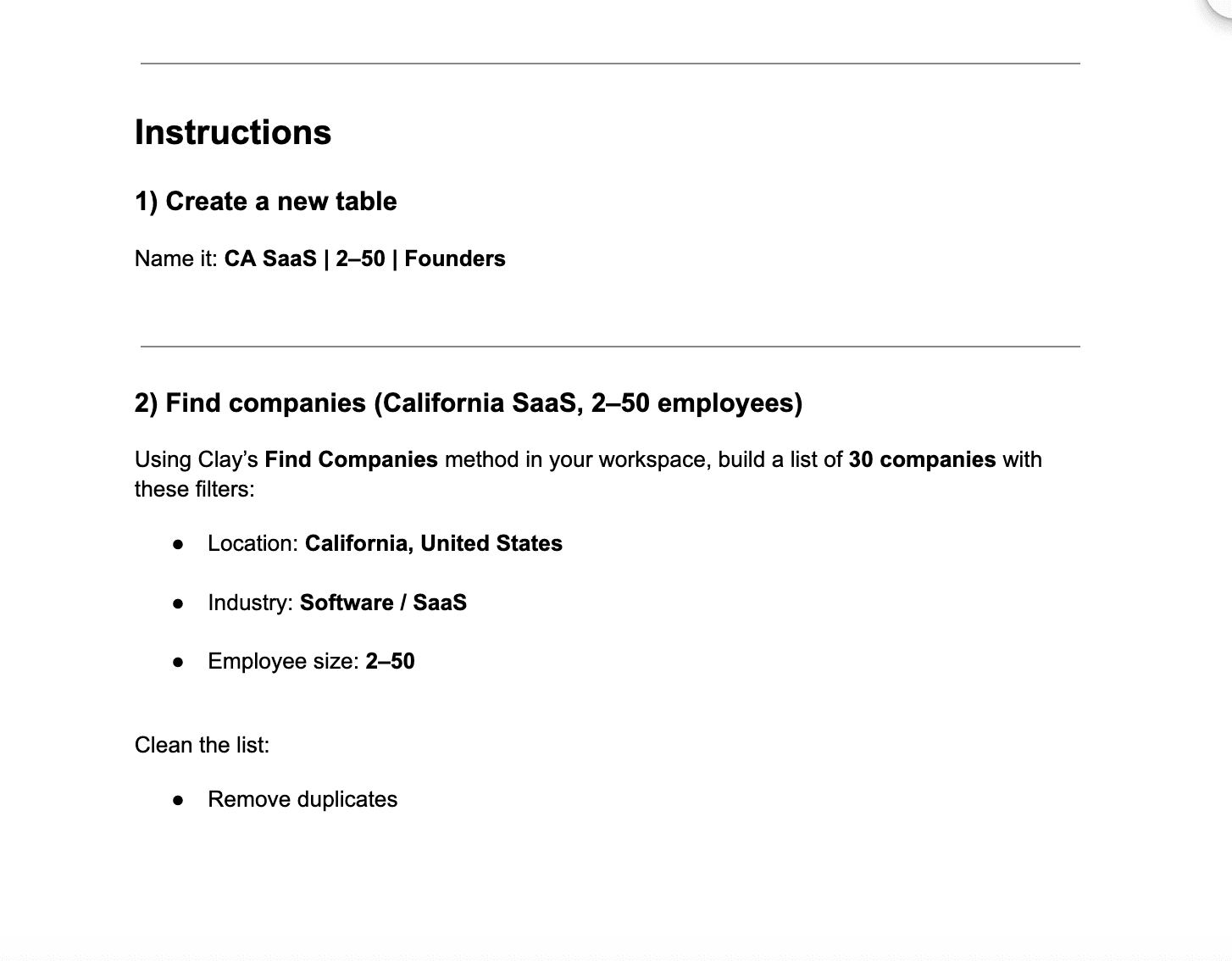
The hiring exercise is a critical component of our selection process. Interviews alone are not reliable indicators of performance. A well-designed hiring exercise allows us to evaluate real-world problem-solving ability, communication clarity, attention to detail, and execution quality.
Exercises should be based on realistic job scenarios and reflect actual tasks the candidate would encounter in the role. These exercises should be continuously refined and improved over time.
For example, if we're hiring a GTM Engineer, we would send them a practical activity that mirrors the day-to-day work — building a Clay table, enriching a list, writing outbound copy, or setting up a workflow.
The Final Interview
A final interview should focus on reviewing the exercise, discussing the candidate's reasoning, and aligning on expectations, availability, and performance standards.
The Hiring Workflow
Our Hiring Workflow
Overall, our hiring philosophy prioritizes value creation over task completion. The hiring process should be iterative — continuously improved after each successful or unsuccessful hire.
Training: The Part Most People Get Wrong
Assuming you've made your first hire and selected someone who is culturally fit, qualified, and capable of completing tasks — and this person could potentially grow with your company long-term — the question becomes: how do you train this individual if they lack the specialized skills needed for your business operations?
For instance, if you are a Go-To-Market Engineering Agency and you just made your first hire, the next step should NOT be overwhelming them with a plethora of resources or training materials.
I learned from a friend who works in Learning & Development (L&D) that bombarding a new hire with tons of documents and resources for self-study isn't the best way for them to learn.
Some might argue against this approach, worried that holding back resources and training materials could cause inefficiency and wasted time. But think about it: training is a key part of your business and should never be seen as a waste.
No matter how busy you get, set aside time for live training with your new hire. This ensures they feel valued, gives them the opportunity to ask questions directly, and produces better results than self-study alone.
This doesn't necessarily mean you have to do it yourself. If you lack the time, consider hiring someone to provide live training — it could be a contract GTM specialist who excels at training. For example, a few agencies have hired me to conduct live, in-person training for their teams.
Training Curriculum Preparation
During the onboarding session, it's essential to cover not only house rules and key business information but also clearly set expectations regarding the training curriculum. This gives new hires a clear understanding of what they will learn and the timeline for progressing from point A to point B.
Additionally, ensure that each training lesson concludes with activities to reinforce learning. Break down the content per lesson and spread the lessons over a period (5 days, for example) to enhance learning effectiveness.
By organizing training into individual lessons, you prevent the experience from becoming overwhelming. This step-by-step, structured approach makes the process more manageable.
Sample Training Curriculum
Clay Operator Role — 5 Days, 2 hours per session
Facilitator: Louise
- •Introduction to Clay
- •Finding Companies in Clay
- •Finding People in Clay
- •Enriching Company Data with Claygent
Facilitator: Louise
- •Enriching Data Using Integrated Tools
- •How to Use AI Formulas
- •Enriching People Data & Waterfall
- •Finding Email Addresses via Waterfall
Facilitator: Louise
- •How to Clean & Normalize Data
- •Email Verification in Clay
- •Data Cleaning & Normalization
- •Pushing Data to Sequencers
Facilitator: Ericson
- •Other Ways of Finding Companies
- •Sending Contacts to Another Table
- •How to Do Lead Scoring in Clay
Facilitator: Ericson
- •Webhooks and APIs
- •More About Clay
- •Final Activity & Assessment
Final Thoughts
I hope you find this helpful! There's still much to learn about the hiring process. As I mentioned, hiring can be unpredictable — it's an art that gets refined with experience.
Although I'm not an expert on this topic, I hope my experience and the insights shared here will be valuable to you.
If you have any questions, feel free to DM or connect with me on LinkedIn!